
The credit notes that came on 2 January: journal entry testing under ISA 240
Last year, 25 vouchers around year end were all fine. This year the team looked at every entry and found five credit notes no sample would have hit. On ISA 240, the characteristics to look for, and why the list is never the conclusion.

Last year you did what most teams do. The client is a building contractor with around forty employees, and journal entry testing consisted of 25 vouchers: the largest manual entries around year end, a few corrections and a couple of entries in round amounts. Every one had an explanation. The working paper was tidy, the conclusion was clear, and nobody gave it another thought.
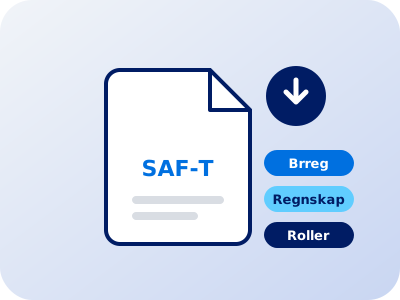
This year you have a complete SAF-T file, reconciled to the trial balance, and you decide to look at the whole population. The first run flags more than three thousand entries. That is not a finding. That is noise.
After an afternoon of tuning, a short list remains. At the top are five credit notes, all posted on 2 January. They were entered by the finance manager, who almost never posts vouchers personally. The amounts are round, the description is "corr. Dec", and each one reverses an invoice issued between 28 and 30 December. Together they account for NOK 1.8 million of revenue.
"Why were these invoices issued in December, and credited two days later?"
None of the five vouchers was in last year's sample. They would not have been in this year's either, if the sample had looked like last year's.
Why ISA 240 requires this
The risk of management override of controls exists in every entity. ISA 240 therefore treats it as a significant risk in every audit, however well internal control otherwise works. Management is in a unique position: it can make entries look right, because it owns the process.
That is why the standard asks the auditor to design and perform procedures to test the appropriateness of journal entries recorded in the general ledger and other adjustments made in preparing the financial statements. Among other things, that means to:
- inquire of individuals involved in financial reporting about inappropriate or unusual activity relating to journal entries,
- select journal entries and other adjustments made at the end of a reporting period,
- consider the need to test journal entries throughout the period.
The standard does not say the sample should be 25 vouchers. It says the tests should respond to the risk. With a complete file, risk can drive the selection instead of convenience.
The characteristics to look for
The application material in ISA 240 describes entries worth a closer look, including those that are:
- made to unrelated, unusual or seldom-used accounts,
- made by individuals who do not typically make journal entries,
- recorded at the end of the period or as post-closing entries with little or no explanation,
- made before or during the preparation of the financial statements without account numbers,
- in round numbers or with consistent ending digits.
The contractor's credit notes hit four out of five. Each characteristic translates into a test on the SAF-T file: account combinations that rarely occur, users with few entries, voucher dates close to the balance sheet date, empty or terse descriptions, and round amounts. It is the combination that matters, not any single characteristic.
From three thousand hits to five
The first run is almost always too broad. A test that flags every entry without a description can hit half the ledger at a client that never writes descriptions. At the contractor, three things in particular created noise:
- Depreciation and accruals are always posted at period end. They are expected, and can be filtered out by account and voucher type.
- Payroll and rent are posted in round amounts every month. Round amounts only matter when they appear where they normally do not.
- The bookkeeper posts a lot in the evening during busy season. Timing alone says little when it is the pattern of a known user.
What remained were entries that were unusual in several ways at once. This is where knowledge of the client decides. A tool can rank, but it is the auditor who knows that the finance manager does not usually post vouchers, and that the contractor had a loan covenant tied to its results.
And however good the test: the list is not the conclusion. It is a list of questions.
Benford's law found nothing, and that was right
The team also ran a Benford's law test on supplier invoices. Benford's law says that the first digit in many naturally occurring sets of numbers is not evenly distributed. About 30 percent of the numbers start with 1 and only around 5 percent with 9. Large deviations can be a sign that numbers were invented rather than recorded.
The distribution looked normal. That did not mean the accounts were fine. It meant that the supplier invoices behaved the way supplier invoices usually do. The credit notes were too few and too specific to move a distribution. Benford's law works well on large sets of naturally occurring transactions. It works poorly on small populations, on assigned numbers such as invoice numbers, and on amounts driven by fixed prices or thresholds. A deviation is a signal to look closer. The absence of one is not a clean bill of health.
When the list becomes a question for management
The team took the five vouchers to a meeting with the managing director and the finance manager. The explanation was that the invoices had been issued "on account" by agreement with two clients, for work not yet performed. The credit notes came when one of the clients objected.
It could be an honest cut-off error. It could also be something else. ISA 240 requires the auditor to evaluate whether a misstatement may be indicative of fraud, and what that means for other parts of the audit and for the reliability of management's representations. Here the engagement partner was brought in, December revenue was corrected, and the matter was assessed against the loan covenant and communicated to the board.
None of this is in an analysis. It is in the documentation: which criteria were used and why, what was found, who was asked, what they said, and what the auditor concluded. A list without follow-up is not audit evidence.
What machine learning can and cannot do
Statistical methods and machine learning can group entries and surface those that differ from the rest. That makes it possible to see patterns a manual sample rarely catches, such as five credit notes among tens of thousands of entries. But a tool does not know that the client has a loan covenant, that a customer objected, or that the finance manager rarely posts personally.
That is why the decision should always rest with the auditor. A tool can suggest which entries to investigate, and why. The auditor decides whether they matter, obtains explanations and documents the conclusion. That includes the flagged entries the auditor sets aside. When quality review asks why, the answer should be there.
How we do it in Revios
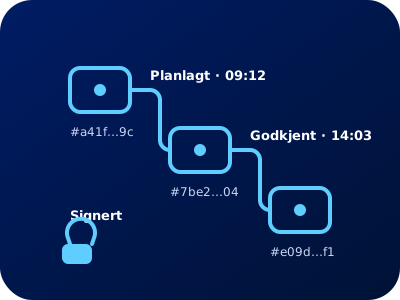
In Revios the analytics run on the entries from the SAF-T file read onto the engagement. Unusual entries are flagged with an explanation of why they stand out, and the methods are deterministic, so the same file gives the same result. A flag has no effect until the auditor has assessed it, and both accepted and rejected suggestions are recorded in the signed audit log, together with who made the decision.
What you can do on your next engagement
- Reconcile the SAF-T file to the trial balance before you use it. A test on an incomplete file gives false comfort.
- Build tests on the characteristics in ISA 240, and combine them. Any single characteristic on its own mostly gives noise.
- Tune thresholds to the client, and write down why.
- Look especially at entries after the balance sheet date that reverse something from before it.
- Document the follow-up of every hit, including the ones you conclude are fine.
Back to 2 January
Last year, journal entry testing consisted of 25 vouchers that were all fine. That was true, but it said little about the risk the standard asks you to respond to. This year it was the same people, the same client and the same standard. The difference was that the team looked at everything, cleared away what was expected, and questioned what was left.
Five credit notes is not much. But they were the five that mattered.
Want to see what journal entry testing looks like in Revios? We are happy to walk you through an engagement from import to review using sample data. You do not need to send us any client information.
About Revios
Revios is cloud-based audit software for audit firms in the Nordics, delivered by Halifax AS. The whole engagement comes together in one workflow that follows ISA, with AI suggestions the auditor approves, SAF-T import and a signed audit log.